Monday, 7 March 2016

The Importance of Play - Games in the Classroom

I have been working with an incredible young entrepreneur in Toronto. Kevin Munn has worked in education for seven years. He has been a Child and Youth Worker, ESL teacher and tutor. I know that I would have loved to have had Kevin work with me and my students. He is responsive to student needs and interests, creating games for them to learn and practice skills. Games helped Kevin learn when he was a student and he created games for the students he worked with. Students with a variety of academic, social and emotional needs responded positively, engaged in their learning. His games became popular with teachers and he created sets for them, even buying his own personal laminator to set up customizable games for them. 
Captain Handsome and my MIL tested the games before I brought them to the ESL class
This year, Kevin's company, Hungry Minds Academy has created "Academy in a Box" - four fully-customizable card and board games for students. I have been using several of the games with my Hotel ESL class and the Syrian refugee youth have been able to understand and engage with them easily.

Kevin is joining #cdnedchat tonight from 8-9 p.m. EST for a chat about the importance of play, particularly about why we should and how we could use board games in the classroom.

He is passionate about empowering students to learn at home and at school and has done the research to back up his product line. Tonight, Kevin's questions are based on a five-year evidence based study (including the complied results of sixty independent studies) about the benefits of gameplay on learning.
Tonight's chat will ask you to read some of Kevin's discoveries before you share your own experience. We don't usually give you a sneak preview, but here are Kevin's questions and what we'll be talking about in #cdnedchat tonight:

Q1: How do you use games (esp board games) in your classroom?

Games are inherently engaging to most students, but how they are used determines how effective they can be in a classroom.  Teachers who use games deliberately have the best results.
Many game mechanics include an element of competition, but that can be downplayed, so that learners see that the competitive aspects are not the focus. (Shauna's note: competition is not inherently evil, but competition and learning don't play well together)
Q2: How do you use inconsequential competition in class?

If games do not focus on important academic content, they will have little or no effect on student achievement.

Q3. How do you work essential academic content into games?

The studies referred to found the most common error teachers make when using games is after the games are complete.  Often teachers just add up team points and move on.  They miss out on the opportunity to debrief to go over aspects that are now clearer, were most difficult at the time, etc.

Q4. How long do you debrief after games, and what do you discuss?
Another boost in the effectiveness of games in the classroom was found in having students take notes on the game/lesson afterwards.  Or to allow students to go back and correct homework, etc. with this new knowledge.
Q5. How can you have students reflect or act on what they learned from their participation in games?

Monday, 29 February 2016

Blue Sky High - What If YOU Designed a High School?


Walt Disney encouraged people to think big. And then he encouraged them to think bigger. He asked them about their blue sky dreams. Look up at the sky. You can't see the end of it. That's how you should dream. There is no limit to how high or how big you can dream.

Right now, I'm blue sky thinking about high school.

My blue sky dream is to open a grade 4-12 inclusive, immersive, experiential school that caters to all types of learners and empowers them to be confident life long learners who can solve real world problems.
I am researching the current structures and systems of public and private high schools around the world to learn more about how users (students) feel about their experiences there.
I would love to learn about your high school experiences, what worked and what didn't work for you as a teenage learner.

I would also love to pick your brain about what we could achieve in high school. Imagine that the existing systems and structures were wiped clean and you could learn in a way that works for you. What could high school look like, feel like and empower our students to do?

What if formal schooling could be more about preparing learners for their lives than preparing them for more formal schooling (and all that entails, like standardized expectations, a focus on memorization of content and high-stakes testing)? Imagine the possibilities!

One way that I am gathering user input is through a survey. I am also conducting one-on-one interviews, starting an online discussion group (on Voxer) and planning dream-building workshops. If you want to share your experience and ideas, or learn along with me, let me know!

Your input will be helpful for my personal research, writing, educational consulting work and eventual my own eventual Blue Sky High creation.

To start off, I am collecting your thoughts in a quick (5-10 minute) survey. Please fill out the embedded survey (also linked here)

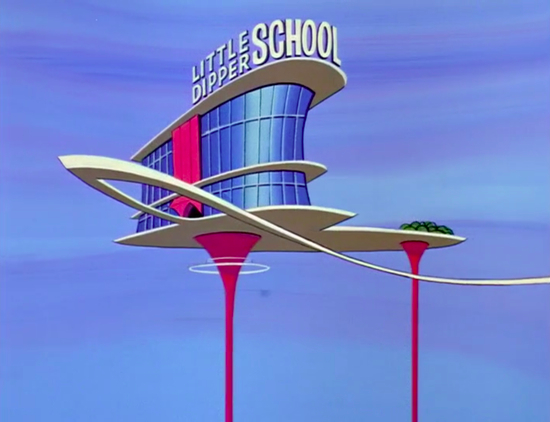
This post includes (creative commons licensed) images that inspire me in my blue sky dreaming about schooling. These were included in a document I shared with artist Jeannette Langmead, in the creation of her masterpiece that is the cover of my book.

Saturday, 27 February 2016

Welcome a Student Teacher Into Your Classroom

Welcome a student teacher into your classroom.

The Why:

As educators, we have the opportunity and the privilege to elevate our profession. Create a prototype classroom where you and your students can help teachers experiment and improve their skills. Mentor teachers that are new to the profession. Be the person YOU needed (and hopefully had) when you were starting your career.

Teaching can feel very isolating. You are often the only adult in a room with 20 or 30 people for 6.5-7 hours each day. Getting to be part of a team will not only empower a pre-service teacher, but will also enhance your own teaching.


The How:

Make a commitment. Promise your student teacher you will do the following things. Follow through and do them:

  1. I will provide you with ongoing, meaningful feedback in the writing and in person.
  2. I will make sure you know #youmatter and how important you are to me and the students.
  3. I will step back and let you make mistakes.
  4. I will push you outside your comfort zone.
  5. I will celebrate your successes with you.
  6. I will respect you as an individual and give you space to be yourself.
  7. I will share resources and ideas with you.
  8. I will make sure that you create a positive digital footprint.

To get started, feel free to use/modify this letter as you wish (it is a welcome letter inspired by my weird and wonderful friend, Doug Robertson in his book, "He's the Weird Teacher").

Why and how do you work with student teachers? What do you wish you had learned from or with your mentor teacher(s) when you were a student teacher?

This is one of my 330 (not exaggerating, in fact, that's where I lost count. There are probably 400 of them by now) posts in a series I'm calling "Purge the Draft," wherein I attempt to purge my draft posts by completing and actually posting them. Don't expect these at any regular interval. That's too much pressure.

Educational Consultant for Netflix: Report #1: Fuller House's Mr. Gerald

As the newly hired Educational Consultant and Coach for Netflix, one of my responsibilities is to observe classrooms in action and report on the performance of teachers. Most consultants in non-demand (aka physical schools, those not available on-demand on streaming services) schools do not report their findings publicly. My new role, however, requires that I publish my reports here for the benefit of teachers (non-demand and on-demand alike) around the world. My report includes information (where applicable) about the career of the teacher; positive actions noticed during my observation; areas for improvement and questions or conclusions I am left with. My mandate is to support teachers in creating more experimental, experiential, engaging classrooms that excite learners and make them realize classroom magic.

Tonight, I had the pleasure of visiting San Fransciso's Van Atta Middle School. I sat in on Mr. Gerald's eighth grade Science class. I was directed to this classroom via Fuller House, S1.4.

About the teacher: Mr. Gerald has led a long and varied career. He began his career as an insurance salesman (under the pseudonym, Ned Ryerson), directed the William McKinley High School glee club "Rhythm Explosion", was a principal on the Day the World Ended, had a stint as the Assistant District Attorney in Miami, and worked as an FBI Agent.
Van Atta Middle School Science teacher, Mr. Gerald
Stars (things that this teacher did well)
I liked it when:
-Mr. Gerald provided students with a hands-on learning opportunity by having them build models of active volcanoes.
-Mr. Gerald used the whiteboards and blackboard in the classroom to post reminders for his students, including their school name.
-the classroom is set up so that students can work collaboratively.
-safety equipment is provided in the Science Lab.
-when the sprinklers unexpectedly go off in the middle of the class, he embraces a teachable moment by saying, "As you're fleeing for your lives, take notice of how your projects are reacting to the presence of H20."
-students have three requirements for their projects, two of which are clearly posted in the classroom, "Build an 'active' volcano" and "Write a report on the building process." Students also have to share their process orally in front of their classmates.

Planets (things to plan for next time - get it, plan-it?)
Next time:
-Mr. Gerald was the last one in the classroom, students were gathered in their workspace several minutes before he arrived. He should work on coming to class on time.
-Mr. Gerald can work on his relationships with students to help improve their engagement. When he entered the classroom and said, "Good morning," they all groaned.
-All of the students had the same expectations and were completing the same project. Mr. Gerald should consider offering students more voice and choice in their learning, allowing them to showcase what they've learned in a self-guided, self-selected manner.
-Despite there being seventeen students in the class, there are only six volcano models. Each student worked independently. I wonder if there is a staggered due date.
-Although their project allows students to show their learning by building a model, their work was expected to be completed as homework. This resulted in one student's mother completing all her work. Even as she shares this with the class, Mr. Gerald only rolls his eyes and does not interfere. If he were to evaluate her project, he would actually be evaluating her mother's work.
-Students should be reminded of when to use their safety equipment, so it doesn't just sit on their tables as they conduct experiments.
-After the fire alarm and sprinklers go off, it takes Mr. Gerald several moments before he reacts and helps students follow fire drill procedures. He seems to be inattentive, as one of his students is able to escape through an open classroom window at this time.
-Mr. Gerald offers an extra credit project that does not require much critical thinking. He asks students to "Summarize the environment around [their] world." He should consider pushing their learning further and asking them, for example, to reflect on how human activities impact the environment around them.
-Mr. Gerald uses sarcasm with his students, and they do not respond positively. He could try other ways to build rapport with them, by getting to know them. There is a new student in his class who he calls only, "the new kid."
-He points at a student and yells at him. Mr. Gerald should practice positive, progressive discipline and not let a student's actions cause him to lose his temper.

Closing Thoughts
Students often enjoy opportunities to demonstrate their learning through hands-on experiences, like building a volcano, as was the project Mr. Gerald assigned his eighth-graders. Science class provides many opportunities for students to learn experientially and relate their learning to the real world. They can use their scientific knowledge and the scientific process to solve real world problems. Mr. Gerald can take advantage of this to push his learners further. Instead of simply having all seventeen students build volcanoes, he could have each of them select different natural disasters to recreate through modelling and physical or chemical reactions. Alternately, the entire class could contribute a model or component to a 3-dimensional map of different landforms. The classroom could be set up with these models and students could go on a visit a small-scale version of a trip around the world.

Despite his wide variety of professional experiences, Mr. Gerald struggles to manage his students and engage them in their learning. I would like to see him bring more of his own experiences and passions into the classroom. He has experience in a range of fields, including legal work, police work, investigation and musical theatre. These skills could be integrated into his Science classroom. This may awaken the scientific passions of his students and help them to think scientifically instead of simply finishing assignments (or having their parents do their work) to earn a passing grade.


Next time...
Is there a television show or movie you've seen and noticed a classroom that could use a little more magic? Let me know who needs my consulting and coaching in the comments below.


Note: all students and teacher have media permission and their names and images may be shared online.

Note: this is a completely fake job. I do not consult for Netflix in real life. In real life, I consume way too much on Netflix. However, my teacher brain never turns off. I decided to add a bit of creation to all my consumption. If you want real educational consulting and coaching, I can do that for you. Or I can write about your favourite (or least favourite) TV or movie teacher. I'll always have something good to say and I'll always have some ways to improve.

Sunday, 31 January 2016

Finding Your Life's Purpose

This post was originally shared on Mari Venturino and Justin Birckbilcher's Teach20s blog. They are creating a community of young educators and mentors and share on their blog and on Twitter with the hashtag #teach20s.

The post below is edited and partially excerpted from Creating Classroom Magic by the author.


Justin and Mari used the process described below to discover their professional identities.


Invest a few minutes in yourself and your future right now. Take time to reflect on and expand your dreams; define your life’s purpose as a professional identity statement; and share this statement with others.

Consider what you want to do in this world and who you want to impact. Think about how you can have the impact you desire. Allow your imagination to run wild, come up with Blue Sky ideas (don’t put a limit on yourself, allow your thoughts to drift as high as a big blue sky). After you have imagined the possibilities, it’s time to make your dream clear so that you can communicate it to others. Many companies and corporations create a vision statement to provide a clear description of a dream.

The professional identity statement you will create today states your purpose. It includes a set of ideas that describe the future state of your personal or professional life. Consider what the best case scenario is for five, ten, twenty or more years from now. Dream big. That is your professional identity statement, or your vision statement. For many years, the Walt Disney Company’s formal vision statement was: “We make people happy.” In recent years, it’s been changed to a much wordier statement that defines that purpose in an unnecessarily extended way. Ask almost any Disney employee and they’ll still tell you the vision of the company is those four simple word: “We make people happy.” I think that’s an extraordinary vision. Not only is it clear and concise, but it describes everything that Walt Disney aspired to do.

I discovered my life’s purpose, my own personal vision statement, nine years into my formal teaching career. I watched the ambitiously named “How to Know Your Life’s Purpose in 5 Minutes” TED Talk by film producer, Adam Leipzig (who, incidentally was an executive at Disney at one point in his career). In his talk, Adam asks five deceptively simple, but remarkably poignant questions. They led me to define my professional identity statement as a vision. You can do this right now. It could even take you less than five minutes, especially if you’ve given yourself time to dream.

Write something down as soon as you’re done reading these instructions. If you don’t love it, come back to it later.

Ask yourself:
  • Who are you?
  • What is the one thing you feel supremely qualified to provide to other people?
  • Who do you do it for?
  • What do these people want or need from you?
  • How do they change or transform as a result of what you give them?

With those five questions, I defined my life’s purpose: I’m Shauna. I create safe, inspiring places for kids. They need someone who believes in them. I help them become the people they never knew they could be.

As an educator, your vision statement will likely reflect your desire to help others. “In order to make good on your chosen task, it’s important to have someone you want to do it for,” Walt Disney said, ”The greatest moments in life are not concerned with selfish achievement, but rather with the things we do for the people we love and esteem, and whose respect we need.”

Once you have a professional identity or vision statement, live it. Come back to it often. Share it. Post it - physically or online, or both. This week, share it on Twitter with the hashtag #teach20s. Consider doing what I did and using your vision statement as your profile description on your social media accounts.

  Your professional identity statement will help direct you when you’re feeling lost or don’t know what decision to make. You can refer back to it and modify it as your dreams change and grow. By defining your vision, you will find it easier to chart your path in life. Your vision is your definition of success. Reflect on your progress often and celebrate all the things you do to live your life’s purpose.


Reflect on your life's purpose. Guide your students to do the same. Share your thoughts below, on Justin and Mari's blog, on your own blog and/or on Twitter, using the hashtag #teach20s!

Tuesday, 12 January 2016

Monorail Blog Crawl: Do You Believe in Magic?

My blog post from Disney's Contemporary Hotel, on this monorail blog crawl I'll created for myself will be written a little differently than I intended. I planned to sit by Mary Blair's mural.

Instead, I'm on the last monorail of the night, passing said mural and posting from the Blogger app on my phone. 

Things don't always work as I plan them. This was a pretty spontaneous plan and I didn't take transportation schedules into account. 

One of my favourite aesthetics is retro future, which makes the Contemporary one of my favourite buildings on Walt Disney World property. It is one of the places that I feel Walt in. It matches his original EPCOT feel, and though it's outdated, I love what Walt's 70s version of the future looks like. 

(Monorail update: I seem to be alone on this entire vehicle. Cast members are poking their heads in and checking where I'm going.)

For me, a structure like the Contemporary feels like magic. I know that it won't have the same feeling to everyone. To me, It feels like a place that was built with a specific story in mind - the story of an optimistic, clean and efficient future. It also feels frozen in time. The building's architecture is very obviously outdated and attempts to update it interfere with the feel of it. Aside from repairs, I'd prefer if Disney embraced the retro-futurism and went all out with the outdated future theme. 

I would like to see more elements of Walt's original EPCOT vision come to life in this hotel, as well as a resurrection of the Monsanto House of the Future (which, incidentally, I was discussing today with an educator who got to visit it). 

(Monorail update: I was, in fact, the only person on the last monorail of the night, at the literal last stop. This post is being finished in the 2nd floor lobby of the Polynesian. I know that doesn't count as a Polynesian post. I'll write one after this. Or maybe in the morning.)

The feeling of magic that I get visiting the Contemporary comes from, I think, a combination of nostalgia and wonder. I have a soft spot for the things that influenced me most heavily between the ages of 7-10. The things I feel in love with then hold such a special place in my heart and memory. Visiting EPCOT Center in those years left me astonished and inspired. The images and experiences I had there have always stuck with me. The future EPCOT Center promised me (like the one in Back to the Future) is the one I'm still waiting for.

To create magic for others, I like to do lots of little things. Right now, I'm waiting to see the impact of a little piece of magic on my cousins. In researching my book, I discovered one of my favourite ideas of all time. A parent describes "Tink Treats." They noticed that their children, upon visiting a Disney park, wanted to purchase souvenirs in the gift shops on property. If you've visited such a place, you've probably noticed, and commented, incredulously, about the prices. There is no denying that the theme parks are a revenue stream for Disney, and the merchandising game is strong. To combat their kids' requests and complaints, this parent devised a magical system of "Tink Treats." While their kids were out of the room, they placed pre-purchased (from a dollar store) items (many of them Disney branded, but only costing a dollar each) in their hotel room. Along with the surprises, they left glitter. The children learned that Tinkerbell visited their room and left them special treats for their next day of holiday. This reminds me of the feeling a child gets after the Tooth Fairy (or Santa, or the Elf on the Shelf) visits. Wonder, amazement and magic.

My past three Disney trips have been accompanied by Tink visits. She left treats for Gillian and Stephanie before Edcamp Magic in 2015. They shared a lot of their treats with kids they met on buses on Disney property. It's not hard to identify them as teachers. She left treats for my #DisneyCAST team: Ashton, Charlie and Travis/Tracy. In fact, the package they received at check-in and the Tinkerbell suite upgrade (to, literally, a Tink themed set of rooms) left them thrilled, puzzled and believing in magic. Tonight, Tink left a letter and treats for my little cousins to prepare them for their Luau tomorrow. I am eagerly waiting for a text from them, sharing their news.

When was your imagination captured so that you felt wonder and magic? How may we do the same for the people we work with: students, colleagues and parents? 

Monorail Blog Crawl: Intentions for FETC 2016

Sometimes I bring my computer to really cool places and write blog posts while surrounded by incredible things. Sometimes, that's just my local Starbucks or my couch, covered by my kitties who sabotage my writing at every turn.

Tonight, my computer and I are on a Magic Kingdom hotel blog crawl in Orlando, Florida. The Walt Disney World resort is the size of the entire city of San Fransisco. It's huge. Only one third of the property owned by Disney has been developed. Another third is set aside as green space, as stipulated by Walt himself when planning for his "Disney World" in the late 60s. That means that one third of the space they own can still be developed, effectively doubling the number of resorts, stores, restaurants, parks and attractions. As it is, you couldn't possibly explore the entire property in a single holiday. In my most recent visits, I've begun exploring areas I've never been. Tonight, I hope to visit the three hotels surrounding Bay Lake, the person-made lake attached to the Magic Kingdom's Seven Seas Lagoon. The best part about these hotels is that they are all connected by my third favourite type of transportation (closely behind Segway and helicopter), the monorail. My plan tonight is to visit the Grand Floridian, the Contemporary and finally, the Polynesian, and write a blog post in each resort.

The first stop is Disney's Grand Floridian. I am currently sitting in Mizner's Lounge, snacking on a flatbread and listening to "The Pink Panther" as performed by a robust live band.

If you're wondering what I'm doing in Florida this time, you've come to the right post.

This week, I have the opportunity to attend FETC (formerly, the Florida Educational Technology Conference, now the Future of Education Technology Conference) as a member of the media. I have a chance to attend a huge variety of keynotes, presentations, poster sessions, discussion groups and visit with other educators and businesses over the next three days. I am thrilled to be here, as I've heard great things about this conference, but have never been able to attend.

Along with Sean "Magic Pants Jones" Farnum, I explored the enormous Orange County Convention Centre (10 000 steps a day will be no problem this week), picked up my press credentials and popped in on some great sessions on the pre-conference FETC Executive schedule. I got to see fellow Canadian, George Couros, invigorate a crowd of administrators with his keynote message of the innovator's mindset (also the title of his new book). As always, George punctuated his points with entertaining and emotionally evocative stories and videos. He deftly ties viral social media stories to his big ideas of passion and innovation and celebrates the successes of others. The man knows how to capture a crowd. In fact, I noticed a member of the site catering staff enter to the room to clear away food and then stand in the doorway, rapt, as George spoke. Some of my takeaways from this keynote inclued:

  • Understand your user to find creative solutions to problems. George said, "Innovation begins and ends with empathy." By thinking about your student as your user, and valuing them as a customer with unique needs and wants, you will be more inclined to empathize with them and find ways to reach, engage and support them.
  • Don't shy away from sharing your story from a few negative interactions. "We need to make the positive so loud that the negatives are impossible to hear," George reminded us. During a presentation to high schoolers, a couple of participants, after being encouraged to reflect live on social media, wrote some awful tweets. George saw them and considered asking everyone to stop tweeting. Instead, he spoke to the students about the power of social media and some started writing positive comments about the impact of his words and stories. So many positive tweets began to appear that the negatives were, indeed, drowned out. This very concrete example reminds me that the "squeaky wheel" can draw a lot of your attention, but not to shy away from something you believe due to negative perspectives or poisonous people. Instead, spread your message, seek feedback and choose what to learn from and what to focus on.

On the eve of a big conference, I try to take time to set some intentions and make a plan. At ISTE last summer, I did this in a poem.

FETC officially begins tomorrow.
My Intentions (some things that I plan to do to get the most out of my time here)

  • Share my learning, live, on Twitter. I have gotten so accustomed to using Twitter on a daily basis, that I assume every event I attend has a hashtag. If it doesn't, I create one. FETC is using the official hashtag #fetc and their social media team is very active, retweeting content leading up to the conference. Because I am attending this conference as media, I am paying special attention to the twitter feed for the conference and plan to interact with other participants, as well as tweet out my learning for members of my network who are present, and those who may be following along at home.
  • I will blog everyday. How many times have I made that promise? This week, I have incredible access to people and resources and want to take advantage of that and share as much as possible. Dozens of tweets each day help me to do that, but a blog gives my brain a little more time to stretch and my words more space to move.
  • I will carefully choose where to spend my time. Unplanned, informal hallway and Blogger's Cafe conversations were some of my best learning moments at ISTE. They remain a priority. However, I've carefully looked over the massive FETC schedule (which is available online, on paper and in app form, for learners of all types) and highlighted sessions I'm interested in. I've taken those and added them to my schedule so that I can head towards them this week, but still be happy to be caught unawares by an engaging, in-depth, surprise discussion.
  • Discerning session selection. I will choose sessions that strike me as innovative, interesting or though-provoking. I will avoid those that are device or platform specific; thinly disguised sales pitches (go ahead and sell me something, but do it honestly!); social media sessions delievered by edcuators without a discernable social media presence; ones that promise "487 ideas in 12 seconds" or any other combination of numbers. I want sessions that dig into interesting ideas and I want to learn from presenters who have a new way of looking at things, share stories and push my thinking.
  • Take care of my feet. When I wake up in the morning or get up after sitting for a long time, it feels like I have skeleton feet. It feels like there is no fleshy padding and that I am walking on sharp bones. I learned that I have Plantar Fasciitis and my feet bother me not only after getting up, but also after walking around a lot. It's really glamorous. Massage helps, so does stretching. Instead of suffering through skeleton feet, I'm going to take care of my dogs. I brought my massage ball and will pull it out periodically throughout the day and roll it under my feet, busting up the bubble wrap feeling that accumulates over the course of a day. 
  • Not worry about being a part of everything. As an introverted extrovert (I'll explain that to you later), being "on" at a big event like a multi-day conference where you know almost no one, is exhausting. If I'm not in the mood for a session or a social event, I'm giving myself permission to miss it. I like to experience lots of things, but I also need to listen to my body and give it some rest when it needs.
  • Puruse my personal passions. Learn about: teacher entrepreneurs; educational consulting; people who have started alternate learning spaces; where thoughtful educators think education is heading in the future and how and if they want that to change. 


My Best Conference Pro-Tips (mostly as reminders to myself)

  • Carry business cards with you. For easy access, stash the plastic sleeve with your nametag on your sweet conference lanyard.
  • A big conference can feel like information overload. Jennie Magiera shared the idea of writing a digital top three list. Create a Google Doc to take your notes for the day, and write the numbers 1-3 at the top of the page. Throughout the day, put your best pieces of learning in those slots. As you develop your ideas, or get better ones, replace them. You can write as many notes in the document as you like (and hopefully refer to them later), but the top three ideas are those that you can instantly see and helps to focus your thinking, remind you of actions to take and give you a shortcut to effective reflection.
  • Have a portable charger. Tweeting, Voxing, texting, using maps and immediately searching for answers of any question that pops into your mind eats phone battery up quickly. Last year, I bought an Anker portable charger for about $40 (including shipping) n Amazon. It's the best money I spent all year. My little buddy has 2 USB ports and about 6 full phone charges. It's not light, but it's very manageable (almost pocketable) and is just what I need when I'm travelling.
  • Bring snacks. This one is very simple, but it is so easy to succumb to conference hunger and chow down on overpriced underdelicious food at a conference centre. With a snack in my bag, I can stave off a growling belly and wait for something that will actually satisfy my tummy and please my palate.
How May We (some things that I am considering and want to find ways to take action on)...
  • How may we use sketchnotes as note-taking frameworks? I sat with a group of educators from Utah today who had printed copies of Sylvia Duckworth's sketchnote about George Couros' Innovator's Mindset philosophy. Remember when people created Power Point presentations and printed out a copy of all the slides (but really teeny), with lines next to them to write your own notes? Though I would now consider those a waste of paper, I really liked using them to organize my notes. How may a presenter create a sketchnote (or any visual model) and leave space for participants to personalize it with their own thoughts and reflections?
  • How may we use participatory audience behaviours from Slam Poetry in presentations at conferences? During the keynote today, I noticed people nodding their heads in agreement, chuckling and making small exclamations, under their breath. At a Slam, people call out their agreement, snap along with the poet when a line speaks to them and cheer at the end (and sometimes in the middle). What would it look and feel like if this was accepted (and expected) behaviour at a keynote or presentation at a conference like FETC? Would the audience feel more involved? Would the speaker feel more supported and learn from the immediate feedback?

Thursday, 31 December 2015

Imagineering in 2015 - Reflections on #OneLittleWord

Last year, I was invited, on Twitter, to select #oneword to keep me on track for 2015. Instead of long reflections on resolutions, I selected the word: Imagineering. I was mid-way through the year with my incredible grade 3/4 Gladiator Snails, and our class was known as EPCOTclass- the Experimental Prototype Classroom of Tomorrow. To keep us on track, I chose to consider designing our learning with Imagineering (Disney's term for imagination and engineering, and the most imaginative, innovative wing of the Disney Company). I applied this word to my personal life as well, and had results that surprised me, most of all.

Classroom Application: I loved the #OneWord challenge so much, I brought it to my class. To start our 2015, the Gladiator Snails selected #OneLittleWord by writing lists of things they are good at and things they are working on. Each student looked at the lists and selected one word that summarizes them and the things they plan to work on for the year. To practice, we made up #OneLittleWord for Norman, one of our class Muppets. Norman doesn't know any Math and sometimes gets down on himself for it. The word we selected for him was "Positive." Each student generated a list of three steps they would take to help them reach their #OneLittleWord target. Once they had decided on their words, we learned about how shapes and colours can represent ideas and emotions. Students created watercolour paintings representing their #OneLittleWord, and we took photographs of them thinking about that word. The photos were glued on top of the paintings and joined by their words, then hung in the hall to remind us of our targets every time we entered and left Room 209.


  • On this final day of 2015, I am going to do exactly the opposite of what I described in paragraph one and write a long reflection about my Imagineering year.


Counting Down 15 Reflections About 2015, my Imagineering Year

15. Collaboration.

  • I worked with the members of: 
    • #comcon (a group of education bloggers who comment on one another's blog posts)
    • Think Tank (a group of educators who met in person in Ottawa to discuss the future of education)
    • #cdnedchat (a group of Canadian educators who lead a weekly Twitter chat for friends in Canada and beyond), who asked me to join them as a moderator this year
    • The Edcamp Magic planning team, who I've happily joined this year 


14. I left my home.

  • Captain Handsome and a handful of friends, family and I redid every square inch of our little home in Ottawa over the past 7 years. I love that little house, but the Captain got a great job opportunity in Toronto and we moved. 
  • I've spent the last 7 months getting used to my new home, as have my remarkably resilient cats. 
  • I have a long way to go until Toronto and I feel like we fit together, but I am very happy to explore the city with my zoo, aquarium, float club, ROM and Warhol Museum annual passes. 


13. I was part of one of the strangest Internet news stories of the year


12. I visited two Disney Theme parks.

  • I spent a total of 15 days at the "happiest place(s) in the world" this year. 
  • I was incredibly fortunate to spend 11 spring days at Walt Disney World in Orlando, many of those days with my Scottish BFF, Gillian Penman; my former student teacher, Stephanie Pimenta(and her awesome family of Peppers!); my former UOttawa student, Kiera Brant (and her incredible mom, Gail Brant-Terry)
  • In the fall, I visited (for the first time in my life) the park Walt actually walked (and lived!) in, Disneyland. I travelled with #DisneyCAST, my brother Charlie, his partner, Ashton and their friend, Travis. 


11. My grade 3/4s and I had an Imagineering Day to build a Global Citizenship Museum.

  • Our school year was all about rethinking education and making sure that we created the best possible learning space and opportunities for all. 
  • Together, we explored our passions, practiced design thinking strategies, improved our research and communication skills and considered ways we could change the world. 
  • Students learned about citizenship in their own country and around the world and compared their lives to those of "Kid Citizens," children in a country of their choice. 
  • Together with parents, other teachers, volunteers, student teachers, and of course, my students, we collaboratively created our learning unit and outlined the outcomes and success criteria for our project. 
  • Our research culminated in a one day creation blitz, where volunteers (including members of my family, students' families and my former students) helped my grade 3/4s use their blueprints and plans to create models of their museum exhibits. 
  • Later that week, we welcomed other classes and our families in to the Global Citizenship Museum and blew them away!


10. I did stand-up comedy.

  • No, there is no video. 
  • Yes, it went well, which surprised no one more than me.  
  • No, I'm not planning to do it again. It was for a project that I'll share more about soon.


9. I left my class with another teacher for two months.

  • Captain Handsome headed to Toronto without me. Six weeks later, I had packed my classroom and house, and followed him. 
  • My amazing Gladiator Snails were left in the very capable hands of a colleague, and I was lucky enough to stay in touch with them via email and Skype until the end of the year. I was so so lucky to teach that incredible group of students for nine months. 
  • We did a lot of awesome things. I learned a lot from my youngest class ever and was consistently amazed by their incredible minds, work and resilience. 
  • For the first September in thirty years, I didn't spend the first days of September in a classroom. 


8. I participated in international PD.

  • I attended my first two international (as in, not in my home province of Ontario or neighbouring province of Quebec) education conferences. 
  • I presented an Ignite presentation and led (with Melissa Eddington) a "Weirds of a Feather" session at ISTE in Philadelphia. 
  • I joined educators from around the globe at the first ever Edcamp Magic in Orlando and got to co-moderate a Q&A with author Jeff Dixon. I helped out with collecting sponsorships and donations for this event and made a goal of gathering enough prizes so that every participant could go home with something. We accomplished this. 
  • Attending these events were really incredible because I got to meet online friends in person and make brand new friends. It was so fun to see my online communities come to life. 


7. I played.

  • I went to Comic Con Ottawa with my former colleague, Erin (before she moved to the Middle East, fully trumping my 4.5 hour move!). 
  • Captain Handsome and I attended a ton of comedy, including the Just for Laughs festival in Montreal. We saw some of our favourites, including (among others): Norm MacDonald, Neil Patrick Harris, Mark Forward (several times!), TJ Miller, Louis CK, Sam Simmons, Rhys Darby, Chris Hardwick, Sean Cullen, James Harnett, the cast of Silicon Valley, Chris Hardwick and John Mulaney. 
  • We saw four Broadway shows: Fish in the Dark (and met the star, Larry David), Hedwig and the Angry Inch (twice, starring Michael C. Hall and then the original Hedwig, John Cameron Mitchell, who BROUGHT IT despite a terrible knee injury), and the absolutely heartwrenching Constellations. We saw Madonna in concert. 
  • Our six-year old nephew cheered his lungs out at a hockey game and got to meet his favourite player (and played it WAY cooler than I ever have when meeting one of my heroes). 
  • We watched movie premieres, with their directors and stars, at the Toronto International Film Festival. 
  • We were in NYC the night of the SNL 40th anniversary, and got to see so many comedy heroes before and after the show (which we watched at a nearby pub). 
  • I played in six Escape Rooms, three of which my teams escaped. I considered how to use Escape Rooms in education and led an #eduescape chat, coached teachers in designing these challenges with their students and put together a model for creating educational Escape Rooms.
  • My brother, our friend Tess and I created brand new ways to play Pokemon (including our, patent pending, Pokemeals). 


6. I celebrated the graduations of former students.

  • I was invited to attend the high school graduation of my last class of grade 8s and cheered them on with tears in my eyes. 
  • Via Periscope, I attended the grade 6 graduation ceremony of my last class of grade 5s. 


5. I thought a lot about what it means to be a leader AND a woman.

  • Attending ISTE, I was shocked at the inequalities in male and female representation in the high levels of education leadership. Most of the best selling education authors, well respected education leaders and speakers are men. 
  • There are many underrepresented voices in education and edtech and a change needs to happen. 
  • I thought a lot about where I see myself in the conversation and how to amplify my voice and the voices of others. 
  • I collaborated with an inspiring group of brilliant female educators to come up with ways to share our ideas and stories and help others to do the same. 
  • We have a long way to go in this area and I will continue to help diversify the landscape in the coming year.  
  • Why does this need to change? Because it's 2015


4. I felt the love.

  • I am pretty uncomfortable being the centre of attention, but, thanks to some exceptionally thoughtful friends and colleagues, I was showered in love this year. 
  • My friends and family threw me two birthday parties (which included Chinese food, karaoke, steak and a pub, some of my favourite places!)
  • My Gladiator Snails and their families threw me a surprise going away party. As did the grade 6 members of my Leadership Club Executive
  • My former teaching partner and dear friend, Tiiu, threw together an enormous going away party with former students and their families at my favourite place in Ottawa, a kids' arcade. 


3. I failed. A lot.

  • Taking a lot of risks this year led to both successes AND failures. 
  • Due to over-exhaustion, I got really sick and had to miss the premiere of the final film in the Hunger Games series. For the past four years, former students have filled a theatre in Ottawa to watch the films on their premiere night. I was devastated to miss the final premiere.
  •  For the first time, I participated in NaNoWriMo, with the goal of writing the first draft of a 50 000+ word novel in the month of November. I didn't come close to completing "The Last Camp on Earth." 
  • I applied to go on an educator's discovery trip to Israel and to present at several conferences in the coming year. I got lots of lovely form and personalized letters of rejection in response.
  • I applied to be a teacher in my new city. Similar outcome. 
  • I participated in a Back to the Future scavenger hunt. I missed the big prize by minutes. That's the one that hurts the most.

2. I participated in the first Team Molly bike ride without our team captain.

  • In Molly's life and since her death, her family and friends have raised more than $100 000 to help other kids with cancer. 
  • The balloon release in the morning, signifying the incredible kids we lost this year, was highly emotional for all of us, but it felt great to be continuing the tradition, in Molly's memory.

1. I wrote a book.

  • In March, I was asked by Bob McLain, of Theme Park Press, to submit a proposal for a book that incorporated Walt Disney and teaching. It was the book that I'd been searching for in my research on Walt and EPCOT and I was thrilled to be asked. 
  • He accepted the proposal, and within nine months, I had my 1.2 lb 304 page baby in my hands. Creating Classroom Magic: Using Lessons from the Life of Walt Disney to Create an Experimental Prototype Classroom of Tomorrow. It's available on Amazon, both in paperback and digital versions. 
  • Two of the most exciting things in the world are: seeing copies of my book on my bookshelf, reminding me of the result of the emotional rollercoaster of pouring my heart, soul and brain out; and getting messages on Facebook, Twitter and email from people as they discover the book and reflect on the ideas within. 


Monday, 14 December 2015

Using the Internet for Awesome

Some people hate Twitter chats. I am not one of those people, but I'm always interested to understand WHY people love or hate things. The complaint about Twitter chats is often that they are one-hour long echo chambers about the same topics that have been discussed over and over.

I have benefited greatly from a huge variety of Twitter chats. When I first joined the initially overwhelming stream of discussion topics tied to #edchat hashtags, I liked the questioning format of: How do you define x in education? How do you use x in your teaching? What are the problems with x in education? What are some resources to learn more about x? I connected with interesting people, got to share stories from my classroom and was inspired to try new things.

As I become more comfortable with online collaboration, 140 characters at a time, I want to push the envelope (like my friends Sean "#2pencilchat" Farnum, Doug "#weirded" Robertson and Ross "#totallyrossome" LeBrun). A few weeks ago, the incredible team at #cdnedchat (who l am thrilled to be a part of this year) embraced the idea of a virtual escape room, and #eduescape was born. The chat bucked the convention and participants were issued challenges that they had to complete before unlocking the questions about how to create immersive, interactive experiences in their classrooms.

When the other moderators at #cdnedchat invited me to host a chat about my new book, "Creating Classroom Magic: Using Lessons from the Life of Walt Disney to Create an Experimental Prototype Classroom of Tomorrow," I wanted to do something a little different. Because I believe strongly in practicing what I teach, I couldn't write a chat that stuck to the familiar format. Instead, I wondered if participants in a 60 minute chat could, in fact, use the power of social media and a PLN (Professional/Personal Learning Network), to make magic. Rather than talking about magic, we're going to try to make it. My hope is that we will be able to make a real change to someone in our hour together.

One of the recurring themes in edchat conversations is how wonderful it is to be a "connected educator" on Twitter and how powerful social media is. I want to test those assertions. How powerful can our voices be?


In the 24 hours leading up to the chat, as I refined the format and questions, I tweeted to members of my PLN who I know have wonderful ideas and great networks. I asked them to both join us and retweet the invitation to the chat. Several retweets and comments have made me optimistic that we'll have a large crew present to:
  • Amplify our voices, stories and ideas in real time
  • Be Brave to share the things that mean the most to us, our students and our communities
  • Collaborate to raise awareness or funds (or even items) for something we care about
  • Determine causes, stories, issues and ideas that would benefit from our help
  • Empathize with others
  • Find ways to take action
(extra points if you noticed how that list was organized!)

Some things to think about that will help you participate in this chat experiment:
  • Let's do something unexpected. Creating magic is about surprising someone, giving them more than they expected and filling them with wonder. How may we do that using Twitter?
  • I am going to try to create as much of a collaborative learning space as possible. If you have suggestions on how to make this better, please share them!
  • What do you think to yourself, "I wish everyone knew about...." (I wrote a post this summer after a tweet I posted about a dead raccoon went kind of viral, exploring what I wish went viral, including #unicorns4molly)
  • The format may be a little different than you're used to, but we'll use Q1/A1 to sort out our thoughts
  • The ideas and stories that engage us might be different. I'm not sure what the result(s) of this chat may be, but want to make sure that everyone feels good about what we accomplish together!
  • You will likely become engaged with other participants and want to continue the conversation, you can do so in the chat with the hashtag #cdnedchat, in DMs (direct messages) and/or long after the chat has finished. If you break off and have a conversation or planning session in DMs, please come back to the chat and share what you've planned!
  • It's totally fine if you have to catch up once the hour is done! We'll monitor the hashtag for a while afterwards!
  • Consider bookmarking interesting links that are shared during the chat so you can come back later and read further.
  • I hope that we can be productive, hopeful and have an impact in one hour. I know that we can do all of those things in a day, a week, a month, a year or a lifetime. I hope that you'll find something in this hour that you want to pursue well beyond it. 
If you follow me on Twitter, you may notice that I often post videos, stories and pictures with the hashtag #DailyCry or a description of "all the feels" or the goosebumps said link produced in me. I search for and post things like this because I believe, despite everything, that humans are good. Watching the news, or even scrolling through a Facebook feed, it can be hard to remember this. In addition to exploring tough issues, I think we need to embrace and share the stories of people doing good, and, as Mr. Rogers said, "look for the helpers."


Over the past week, there have been tons of wonderful news stories, and stories of helpers. Here are just a few I found:

  • Safyre Terry now has boxes filled with Christmas cards. This young girl was badly burned and lost her family in a house fire caused by arson. She lives with her aunt, who shared a photo of Safyre, by a Christmas card tree, and a wish that the tree be filled up.
  • A Florida McDonald's Drive-Thru had a 250 person streak of "paying it forward."
  • Sports Illustrated's High School Athlete of the Month is a big brother that led his community in fundraising to create an inclusive playground, so that his little brother, who has Cerebral Palsy, could play with his friends. How did he fundraise? He carried his brother on his back for two treks (totalling nearly 100 miles) he calls the "Cerebral Palsy Swagger."
  • Students are wearing orange to support a schoolmate with cancer who was being bullied online.
  • Residents of a drop in and rehab centre, who are homeless, donated money to the Children's Wish Foundation. The money was raised by collecting and recycling cans.
  • High school students practiced empathy in a project called, "Walk a Mile in Her Hijab" where students who don't normally wear a hijab spent a day wearing them.
  • A grade 8 student made a video board to help his friend communicate. Because he was struck by lightning, his friend was unable to communicate effectively. This young inventor created a device ethat his friend can control by moving his head to answer "yes" and "no." 
  • This has been an exciting week in Canada, as the newcomers (Syrian refugess) that are sponsored privately and by our government begin to arrive to their new homes. Teach Kids News has an article about the newcomers to Canada (this is a great website that features articles written in kid-friendly language, and has curriculum connections for every news story.
  • children's choir in Ottawa (my hometown) learned and performed a historical Arabic song to welcome newcomers.


Some of the above stories have gone viral. All of them, and so many more, deserve to.

Who would benefit from our help? Let's figure it out together? Edvengers (yes, I went there) Assemble!


I can't wait to hear YOUR stories and help make some magic in tonight's #cdnedchat.