Wednesday, 2 December 2015

#eduescape - Escape Rooms in Education

My brother, Charlie (this post is dedicated to him, the day after his birthday! Happy Birthday, Charlie!) and his partner, Ashton introduced me to Escape Rooms nearly a year ago. We were in New York City for New Year's 2015 and they insisted that I come play an immersive game with them.

We spent an hour locked in a tiny apartment with a family we'd never met before and, together, solved riddles, puzzles and challenges to get enough keys to unlock a lockbox to let us out of the room.

Immediately, my teacher brain turned on and I began to think about ways to play with my students like this. The idea has continued to percolate as, in the months since I've:
  • defused a bomb with my little cousins in Orlando (Shauna's Escape Rate: 100%)
  • escaped from a deranged killer's wine cellar in Ottawa (SER: 100%)
  • stayed captured in the scariest serial killer basement in Vancouver (SER: 66%)
  • escaped from a dream in Vancouver (SER: 75%)
  • failed to find a detective's missing daughter in Vancouver (SER: 60%)
  • brainstormed with a teacher in Ottawa about how to turn her Hallowe'en Haunted House into an Escape Room for grade 1-6 students
  • gotten totally derailed from an American Thanksgiving #totallyrossome chat in a side-conversations with educators about #eduescape - our ideas for Escape Rooms in education
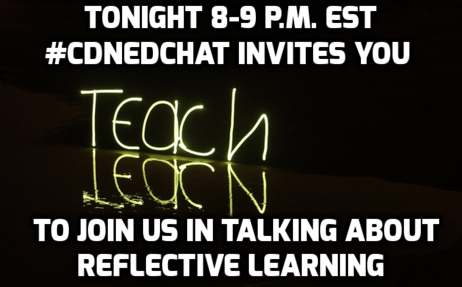
  • hosted a virtual Escape Room for educators in #cdnedchat
Tweeting about #eduescape has led to connecting with more educators who are keen to experiment with their students to use Escape Rooms in education. In preparing to talk to two Ottawa educators about their developing #eduescape plans, I put my thoughts down.

Below and linked is a summary of my research, thinking and development of how to use Escape Rooms in Education. There is a link for a Planning Template that you can use, as well as other resources to explore.

I am so excited about this innovative teaching method. If I can do anything to help or support you as you experiment and prototype Escape Rooms in your classroom, let me know!


Escape Rooms in Education


“Escape Rooms are live-action, team-based activities where players discover clues, solve puzzles and accomplish tasks in one or more rooms in order to accomplish a specific goal (usually escaping the room) in a limited amount of time.” (source: Scott Nicholson)


In education, we can use the concept of Escape Rooms in a number of ways to excite learners and help develop their skills, teaching them content through immersive, engaging play.


Why Would You Want to Use Escape Rooms in Education?


In Escape Rooms, students use gameful attitudes and teamwork to solve riddles, challenges and problems.


Gameful Attitude:
Jane McGonigal (author of Super Better, link below) says, “Being gameful means bringing the psychological strengths you naturally display when you play games - such as optimism, creativity, courage and determination - to your real life. It means having the curiosity and openness to play with different strategies to discover what works best. It means building up the resilience to tackle tougher and tougher challenges with greater and greater success.”


Skills Developed: teamwork, delegation, communication, risk taking, attention to detail, perseverance, critical thinking, lateral thinking, time management, optimism, creativity, courage, determination


Advantages of Using Escape Rooms for Learning: engagement, fun, immersive experience, build sense of community, experiential learning


Curriculum Tie-Ins: the sky’s the limit! You can teach or practice any content through the storyline and/or challenges you incorporate in your Escape Room. There are obvious storylines from history and current events that can be used. Challenges can incorporate math, science, technology, art, reading, writing, finances, literature, music, geography, physical activity and other disciplines.


Planning an Educational Escape Room


Key Elements:
A great Escape Room should include the following elements:
  • mystery
    • to increase excitement, there should be a mystery, players have to wait to see what is in store
  • a goal
    • set the purpose of the challenges - what are players trying to do?
    • Possible concepts:
      • be an adventurer
      • carry out a heist
      • defuse explosive device
      • engage with supernatural
      • escape an unpleasant place
      • find a missing person
      • free another person or animal
      • gather intelligence
      • help create something (potion, cure)
      • investigate crime
      • military operations
      • send a message
      • solve a murder
      • solve a mystery
      • survive
  • opportunities for collaborative problem solving
    • some challenges should need multiple players to solve them
  • multiple challenging puzzles
    • variety is best
  • time limits
    • many Escape Rooms have to be solved in 60 minutes
  • gamemaster (the “host” of the game)
    • sets the scene, tells the story
    • giving hints
    • ensure that there is a fair experience and that challenges are working correctly
    • intervene only when necessary to allow players to engage with challenges, make discoveries and learn
  • debrief at the end
    • gamemaster explains any unsolved challenges
    • discuss strategies that worked and didn’t work
    • how can the challenges be better in the future?
    • how can players work better in the future?


An exceptional Escape Room may also include some of the following elements:
  • a theme
    • consider using an Escape Room as part of a unit and create it to match the time/topic
  • a story or narrative
    • giving the players context
    • build up a backstory
  • immersion
    • suspend player’s reality and allow them to be in a different time or place
    • decor/decorations to transform the classroom
  • role playing (including a game master in character)
  • red herrings
    • false clues to throw players off


Possible Challenge Types:
  • abstract logic (a puzzle, like Sudoku)
  • assemble a physical object (such as a tower or jigsaw puzzle)
  • ciphers
  • counting
  • engagement with characters
  • hand-eye coordination (such as hitting a target)
  • hearing
  • hidden messages (such as those written in “invisible pen”)
  • light (including black lights)
  • liquids
  • locks
  • mapping
  • math
  • mazes
  • mirrors
  • morse code
  • noticing something “obvious” in the room
  • out of the box thinking (using something common in an unusual way)
  • physical agility
  • prior knowledge
  • research using information sources
  • riddles
  • ropes or chains (such as undoing knots)
  • search for objects in images
  • search for physical hidden objects
  • shape manipulation
  • strategic thinking (like Chess)
  • team communication
  • touch
  • visual patterns
  • word patterns
  • word puzzles (such as crosswords and word searches)


Consider:
  • Do you need players to solve challenges in a certain order?
    • Does the solution for one challenge lead to something else (for example, do you have to unlock a box that holds a magnet before you can use the magnet to remove a key from a maze?; do you need the code for a padlock that opens a box with a clue for another puzzle?)
  • How many players are needed to solve each challenge?
  • How can you immerse your students in the story
  • What guidelines and rules do you need to set?
    • do players have to take turns?
    • outline areas or objects that are off limits
    • make sure players know that they won’t need to break anything to solve challenges
    • Some people are concerned with the name “Escape Room” in an educational context. Here are some possible alternate names: Adventure Room, Challenge Room, Mystery Room
  • Will you incorporate a penalty for any hints?
    • you may subtract time if players use hints
  • What is your success/escape rate?
    • Balance how difficult the overall challenge and individual challenges are
  • How can we prove that this is learning?
  • What are the Success Criteria/Expectations?
    • go through your standards/curriculum and make a list of what expectations you will address


To Make This More Student-Led
Use Design Process (loosely based on The Design Sprint from Google Ventures)
  • Define
    • Collaboratively, define the problem
    • How may we (HMW)
      • create an interactive, immersive adventure with multiple challenges that addresses X standards/expectations?
      • tell a story that players can be a part of through active play?
    • Who are our users? What do they need from us?
    • Set a deadline: when do we want to launch this?
  • Unpack
    • Share what you know
      • Brainstorm essential elements of Escape Rooms
      • Share experiences or stories about Escape Rooms
    • Split the task up into steps
  • Rapid Brainstorming
    • As a group, share ideas for themes, storylines and individual challenges
      • accept and record all ideas
    • Individually, students use “Crazy 8s” model to brainstorm and iterate ideas
      • Remind them of the HMW question (from “Define”) they are solving
        • Each student folds a legal-sized sheet of paper in eight
        • In each of the eight sections, they have 30 seconds to visually represent an idea to solve the HMW question
  • Develop an Idea
    • Tell the “User Story”
      • Individually, students consider their eight ideas and pick one to develop
      • Each student creates a three panel storyboard developing the story for that idea (you can give them a template with three boxes, a page with three large sticky notes or have them create their own)
      • the storyboard should have the HMW question at the top and the story should be clear to a viewer without any further explanation
  • Feedback
    • Students look at their peers storyboards and offer written or verbal feedback in the form of “I liked it when...Next time…”
  • Decision Making
    • through discussions and/or voting (anonymous or public), decide on which (and how many) ideas to develop further
  • Prototype
    • Students revise their storyboards and create rapid protoypes of their ideas (make props out of paper, show challenge through dramatic play, etc)
      • These are protoypes and should be created so that they communicate the purpose of the element, there is a focus on testing the idea, not in creating something flawlessly beautiful
  • Test
    • Students test each others’ prototypes and offer feedback in the from of “I liked it when...Next time…”
  • Iterate
    • Students make improvements or rework protoypes
  • Test
    • Students’ test each others’ iterations and offer feedback
    • repeat as many times as needed
  • Put it Together
    • Students’ contributions are combined to solve the HMW problem
  • Provide product/service/experience to users


Use the ideas above to think about your Escape Room and then fill out the details in this Planning Template.


I hosted an #eduescape Twitter chat for #cdnedchat. If you want to see how to fill out the Planning Template, here is the plan for that game: #cdnedchat Escape Room.


Resources

Friday, 6 November 2015

Because It's 2015

There has been much talk of Justin Trudeau's "mic drop" moment this week.

For the first time that I can remember, I am excited about politics, and Canadian politics at that. Many of my friends and family are too. Justin Trudeau was elected as our 23rd Prime Minister on October 19th of this year and my Twitter and Facebook feeds have been filled with excitement, hope and lots of memes about our new PM.

He and his new Cabinet were sworn in on November 4th, two days ago.

It was a historic event for many reasons:

1. Justin is our first ever second generation Prime Minister. His dad, Pierre Elliott "Trudeaumania" Trudeau, was our fifteenth Prime Minister and a media sensation. Justin is already following in his father's footsteps on both counts.

2. The announcement of the Cabinet Ministers included Justin following through on his promise to appoint an equal number of men and women. For the first time in Canadian history, we have gender parity in our federal Cabinet.

3. Some big changes were made to the titles of the Minister's portfolios, filling people with hope that our new government will make issues important to Canadians and the world a priority. We have a Minister of Immigration, Refugees and Citizenship, a Minister of Indigenous and Northern Affairs and a Minister of Environment and Climate Change.

4. I was glued to the TV and Internet, following political news. Although I vote in every election, I have largely been apathetic about Canadian politics. Suddenly, I'm not.

The "mic drop" moment occurred when Justin, unlike his predecessor, took time to address the media immediately following the swearing in ceremony. He was asked why it was so important that his Cabinet be gender balanced. He replied simply, "Because it's 2015." The gathered crowd erupted in cheers. In the days that have followed, the Internet has also erupted in cheers.


Watching the ceremony, I was captivated by the short commentary being made by newscasters as each new member of the Cabinet approached the front of the room for their swearing in. Their ages and backgrounds varied widely, and the diversity of this group of individuals was something I'd not seen before. Not only are 50% of the appointees female, but they vary in: age; place of birth; hometown; marital status; sexuality; religion; skin colour; former professions (a teacher, doctors, lawyers, a social worker, athletes, scientists, a geologist, a police officer and war hero, professors, entrepreneurs, economists, journalists and writers, volunteers, community leaders, an orchestral musician, an astronaut); culture (we have two First Nations Cabinet Ministers); health (there is a Minister who has battled breast cancer twice); abilities (one Minister is quadriplegic, another is visually impaired) and life stories (one Minister was falsely imprisoned in another country for two years, another is a refugee to Canada).

I searched for a complete list of the Ministers, their job titles and facts about them. Finding none, I took Chris Hardwick's advice and made a thing. I Googled each member of the Cabinet and sought to find out their full name, new job title, hometown, age, place of birth and additional interesting information. This I called "Special powers." Many of the Cabinet Ministers had only local news articles and a Liberal campaign page as I began my search. In the minutes and hours that followed, I discovered that busy Internetters were creating Wikipedia pages for each of them, even as I sought information elsewhere. I've been able to return to those and get information that I was unable to find elsewhere. Eventually, I finished the 31 cards, one for each of the 30 Cabinet Ministers and one for our new Prime Minister. I have called them Canada's Cabinet Trading Cards.

I Skyped with a former student the day after he attended the Swearing-In with his class. He excitedly showed me the work they did in class to follow-up. He had marked the hometowns of each of the Ministers on a map of Canada and tallied how many males and females were in the Cabinet. This nine year old was as excited as I am, and had watched the historic event live, at Rideau Hall in Ottawa.

Right now, I wish I was in the classroom. There are so many things I'd like to share with my students.

  • I would like to take the trading cards and give one to each of my students, assigning them to that Cabinet Minister for the year. I would have them research their portfolio and follow the news to see the changes they proposes throughout the year. I would encourage the student to write letters to that Minister, sharing what they learned and any advice they could share. 
  • I would print two sets of the trading cards and teach them how to play "Guess Who" with their new Cabinet.
  • I would have them order the Ministers by age and then do math about that. Find out when they first started in politics, figure out how many years of experience they each have.
  • I would have them attach the Ministers to the locations of their hometowns on a Canadian map. Then, we'd find the birthplaces of those Ministers born outside of Canada. 
Fortunately, I have awesome friends who are still in the classroom and excite me with stories of how they are teaching their students. My former teaching partner and soul sister, Tiiu, is now the Prime Minister in her grade 5/6 class. All of the students, after witnessing the swearing-in first hand, have selected ministerial positions for their class and had a raucous swearing-in ceremony today. After posting the Cabinet Minister Trading Cards on Facebook and Twitter, I have had friends add to the document and share it with other teachers, suggesting ways to use the cards. 

Tiiu's class' Ministers.

Back to the reason for this post. Gender parity was a priority in our Cabinet because it's 2015. Gender parity is important in education for the same reason. You can tell by looking around almost any elementary school that there are a higher percentage of female than male teachers. Search for the names of principals and vice principals at those same schools. You'll notice that there are a lot of men who take power positions. Look at the lists of those in power at a board or district level, and you'll see the female names continue to decrease. Attend a big teaching conference, especially one focused on technology, and look at the names and photos of the speakers. You will notice that most of them are men. Why does this disparity happen? There are so many possible reasons, and I'm not OK with any of them. 

If Justin Trudeau can assign 50% of his Minister positions to intelligent, strong and successful women, we can surely do the same in education. We need to make it a clear priority to balance out gender (and race, and sexuality, and religion, and physical ability, and age) in the most powerful and visible positions in education. 

50% of the population is female. 50% of our students are female. More than 50% of our teachers are female (some recent numbers that I was able to find show that: in Canada in 2006, 84% of elementary and preschool teachers and 57% of high school teachers were female; in the US in 2011-12, 78% of teachers were female; on a table created by The World Bank, listing gender balance of teachers from 2011-2014, most countries have a significantly higher percentage of female teachers)

Like the Canadian Cabinet now having a wider variety in voices at the table, we need more equal representation in the education conversation, at all levels.

The new Canadian Cabinet shows us what change can look like. We need to follow the excellent role modelling and make it easier and more comfortable for women to share their voices. 

Some excellent resources are available, if you want to learn more. 
  • Read about and reflect on Speaking While Female. Consider the gender biases present in the structure of meetings you attend. Are the female participants barely heard? Are they judged to be too aggressive if they speak out? Do men in the meetings take their ideas and get the credit?
  • Follow the hashtag #changetheratio and add your own observations to it. Next time you are at an education conference or professional development event, observe the ratio of male to female participants and presenters and reflect on how you feel about it. 
  • Check your Twee-Q: enter your Twitter handle (or anyone's, for that matter) to analyse the proportion of recent retweets, based on whether they came from a male or female's account. Consider, as a connected educator, whose stories you are celebrating and sharing. 
  • Consider ways that we could accept blind applications to conferences. Instead of putting a name and gender on an application, assign applicants a number. Selection committees could chose based on merit of ideas, not preconceptions about the individuals sharing them. 
  • If you're a woman, Lean In. Get more involved. Don't let yourself sit back. Become empowered to be confident and believe in yourself. 
  • Ask4More. Demand equal pay for equal work in all fields.
  • Explore "mansplaining" and do what you can to stop the cycle.
  • Share other ideas and resources you have with your communities, in person and online.
Our classrooms are full of young children who see themselves in the world around them. Seeing our most powerful governing bodies become more representative of them and their families can give them a lot of hope. They can see themselves in positions of power. Starting in their classrooms and school buildings, they need to see a more valued and diverse population of leaders. Why do we need to do this now? Because it's 2015.

Tuesday, 27 October 2015

A Work Space Where No One Works: 11 Lessons from Innovative Work Spaces

Today, I visited a couple of friends at Idea Couture, a strategic innovation and experience design firm.

Every word in their title and description is amazing. Imagine if you described your school in a similar way. Schools should be strategic and innovative. We should carefully design the experiences for our students (and staff and families). Ideas should be fresh and couture - they should be designed to our students' specific requirements. It wouldn't be enough to just describe your school this way. In fact, fancy mission statements and statements of vision mean nothing without follow through. The day to day operations of your organization need to match the words you use to describe it, or they need to change.

This summer, I visited a couple of innovation hubs (MaRS and CommuniTech), which, like Idea Couture, have put a lot of time and thought into the design of their space. Schools can be innovative hubs and the physical design of them should reflect this idea.


Idea Couture published a book called "No One Works Here." The secret subtitle that appears inside the book is "Everyone Plays Here." This would be another great way to be able to describe school. Instead of looking at learning as work, if our students looked at it as play, we would see an increase in engagement and excitement.

I was really impressed by Idea Couture's atmosphere, right from the moment I walked in. I have a school in my head and I am constantly gathering inspiration for it. If I could kick out the staff at Idea Couture and move my grade 4-12 students in, I think we could do some amazing things.

Schools can learn lessons about turning work into play by carefully designing learning spaces from innovative companies like Idea Couture.

Lesson 1
Celebrate individuality and learn about the importance of branding.
photo from ideacouture.com
Everyone is encouraged to make their mark at Idea Couture. When they are hired, they're given a plastic toy bear that is like a blank canvas. They can decorate, brand and individualize them in any way they choose. At their San Fransciso office, they have several of these bears on display in a gallery.
photo from ideacouture.com
From the beginning of the year, students should know that their classroom is their space. For the past few years, my students spend part of their first day of school decorating a shaped popsicle stick. We use these for many purposes throughout the year, including as washroom passes, to determine partners and groups and to draw names in random order for a variety of activities. By expressing themselves and individualizing one of these on their first day, students get a chance to tell their own stories.

Lesson 2
Celebrate and commemorate past successes.
photo from ideacouture.com
One of the seating and working areas is decorated with stylized posters of some of the past projects Idea Couture has completed. There are simply designed graphics that represent clients and products they have worked on. These can provide inspiration for guests and clients, as they are posted in an area that is as close to a waiting room as IC has. It is also a work space for employees and is surely intended to celebrate their past work and successes.

In your classroom, the walls can be covered in student work, instead of store-bought posters. Tell the story of your team and what you have accomplished. Showcase your learning and successes.

Lesson 3
Write and share your story.
IC has bears that help individuals share their stories. They have posters that share the story of the company for visitors. They also publish a quarterly magazine and books to share their ideas, work, philosophies and lessons for others.

I'm sure other educators would have similar excitement when my friend told me that I could take a copy of any or all of the books that are beautifully designed and were on display all over the three stories of the office. I left with a backpack that was so full of gorgeous new hardcover books that I was worried about the stitching on the straps. You'll be happy to hear that I made it home safe, as did my backpack. My shoulders were less fortunate.

My cat is concerned that these books will cost her my attention. 
Help your students write and share their learning story and share it widely. Though you likely don't have the capabilities to print gorgeous hardcover books, you can share your photos, videos, work and writing very professionally for free. Make use of media that is available to you and help your students create media to share with their families and the world. It is no longer enough to share a newsletter with parents or a yearbook commemorating the events of the whole year. Make a class blog. Have a class Twitter account. Create videos and share them on a class YouTube account. Update these regularly by sharing your students words, ideas, work and reflections on their learning.

Lesson 4
Create a space that is inclusive.
On the doors to the washrooms at IC, I noticed labels that were a bit unusual. Instead of a recognizable stick person, each of the two washrooms was labelled with "He/Xe" or "She/Xe." Xe is a gender-neutral pronoun and the writing on these washrooms made it clear that any person was welcome to use these facilities, regardless of assigned gender.

From my understanding, "Xe" is theoretical pronoun and many people, instead, prefer the gender-neutral pronoun "they." I appreciate the effort with the labels, regardless.

There is considerable debate happening in educational institutions about how to make all learners feel included. Gender-neutral and private washrooms are a great step.


Lesson 5
Value physical activity and brain boots.
IC has devoted two rooms to physical activity. They have a small gym, with a treadmill and weights and a ping-pong room. Employees can self-select when they need a brain boost and use these rooms to play or exercise. They also have a single golf hole set up on one floor.


In your classroom, create time and space for students to boost their brain power through physical movement. Full class activities from a site like GoNoodle are great. Providing students with tools and strategies to self select brain boosts is also important. I have had a stationary bike and mini trampolines in my classroom for this purpose. Students practice Brain Gym and use the actions they've learned to renew and refresh themselves as needed. I do not control the times they are "allowed" to do these activities. They know their bodies and take time when they need it, making sure to be respectful of others' work habits.

Lesson 6
Everything is a writing surface.
Most of the walls in IC do not have permanent art or decorations. They are covered in white boards. Windows are used for writing on. There are large, portable whiteboards in common working spaces. Neon sticky notes and colourful dry erase markings cover every surface. The tables seemed to be covered in whiteboard paint, but I told they weren't. Being a visitor, I didn't test it out to try to prove myself right.

not IC, from logovisual.com
More and more schools are investing in whiteboard paint on walls and tables and giving students opportunities to write and draw ideas all over their classrooms. You can buy a large sheet of whiteboard at a hardware store and have the employees cut it into one foot by one foot squares for students to use instead of paper. My biggest problem is always in keeping enough whiteboard markers in working order. They dry out easily and can be very expensive. Doodling in one of the rooms at IC, I realized that schools are not unique in having this problem.

Lesson 7
Be transparent.
I have fallen in love with, instead of total open concept, lots of different sizes of work spaces with transparent walls (otherwise known as windows). IC has several conference rooms, meeting spaces and offices that have at least one glass wall. The benefits to this are many. I saw writing on several of these windows. A wall of windows provides the perfect mix of privacy and transparency. People can speak to one and other without being overheard or disrupting others, but as you walk by, you can see what they are doing. Natural light is disbursed throughout the entire floor when workspaces with windows to the outside world also have windows to the inside world of the office.

not IC, photo from southwestsolutions.com
The school in my head looks a lot like this. Students will work in groups in windowed rooms and cubes. As they walk by, other students and staff are encouraged to look in, see what's going on and enter, sharing their input.

Lesson 8
Use a variety of tools: analog and digital. 
Employees at IC had laptops at their desks, or on their laps (as the name helpfully suggests). They also have piles of paper with jars of markers and pencils. Whiteboard markers and whiteboards are all over the office, as mentioned earlier.


Some schools (more specifically, purchasers for some schools) believe that innovation will happen when students and teachers are given fancy new technology tools. By investing in devices for all students or SmartBoards in all classrooms, they believe that learning will transform. The tools are only that, tools. It's up to the user to effectively harness the power of thinking and learning, and use a tool to enhance that. Make sure that your students have access to and strategies for using analog and digital tools.

Lesson 9
Be flexible.
IC provides desk space to employees, but nearly all the desks were empty. Instead, people were working on couches and in collaborative work spaces surrounded by windows.

When they have the choice in my classroom, many students lie on the carpet to do their work. Some sit on benches or stand up. My dream school is full of a variety of flexible learning spaces that feel more like living rooms, cafes and restaurants than a traditional institution. In ten years of teaching, I have never had individual student desks. I scrounge for tables and make spaces for students to work individually or in groups.

Lesson 10
Flatten the hierarchy through sharing the space.
Though senior team members, including the CEO have offices at IC, they are not wasted space when they are not being used. The CEO was out of his office when I visited and groups, including ours, use the space. Like many of the collaborative work spaces, his has a huge window as the internal wall. Instead of a desk and filing cabinets, as you might expect in a CEO's office, there is a huge conference table surrounded by comfortable chairs, welcoming working groups. Next to that office is another large office, this one with a similar set up in addition to a short table with floor pillows. People can work by sitting at a regular height table or by sitting on the floor at the much shorter one.

Lots of educators are being encouraged to get rid of teacher desks to make room in their classroom for students. Acknowledging that teachers spend a lot of time working at their desks after school and in breaks, I don't think this is necessary. Instead, I think it is an individual choice, but the placement of a teacher desk (or, even better, table) should be carefully considered. The classroom that is familiar to many is one with the teacher's desk at the front of the room, backed by a black (or white) board. The students sit in rows of desks, facing that. Though much of student seating has changed, teacher desks often remain in the "traditional" position. I would encourage teachers to consider placing their desk in a corner of the classroom and making a point to work with their students at it and around the room as much as possible.

I will not sit at the front of the classroom all day. I will not sit at the front of my classroom all day. I will not sit at the front of my classroom all day. Write that on the blackboard 20 times.
Visually and in practice, eliminating the hierarchy of individual work spaces, creates a more welcoming atmosphere.

Lesson 11
Inject fun through themes and names.
Each of the collaborative work and meeting spaces at IC has the name and image of a toy or game on it. Instead of meeting someone in conference room B, you might meet them in "Tinker Toys." At MaRS in Toronto, the conference rooms are labelled with inspiring quotes.


In a classroom, themed immersion adds an element of fun to the culture. Use language and names that are relevant to your students. Give them the opportunity to pick them. We had "Work Apartments," instead of "standing files" for students to store their notebooks. They used class iPads that they named "Isaac," "Ivy" and "Ilys."


Spoiler alert: This is very similar to the school in my head.
Photo from The Jetsons
Design is important in everything we do. Consider the purpose for a space instead of just doing what's "always been done." Create a place where people feel engaged and excited to work and learn.

Monday, 26 October 2015

Reflecting on Reflecting

Reflecting on reflecting is a funny thing. It starts to feel like an Esher painting as you think about the importance of the importance of thinking about how you think. Even that sentence has my brain in knots.

I have learned that, for me, self-reflection is the key to my own learning. For years, I told my students it was key to theirs' and helped them do it, with some effectiveness. It isn't until recently that I realized I wasn't doing very accurate self-reflection.

The problem was, I wasn't practicing what I was teaching. I told my students to celebrate their efforts, not just their successes. I told them to internalize positive feelings and feedback. I told them to objectively look at themselves and their work and appreciate what they were doing. I told them to look for ways in which they could continue to improve and grow.

The only one of those that I was effectively, consistently doing myself was the last. I am really good at finding things I need to get better at.

All of the positive aspects of reflection that I taught my students were falling on my own deaf ears and mind.


Recently I realized that when I told myself I was reflecting, what I was doing looked more like the Magritte painting above. I tried to examine my actions and thoughts in a mirror, instead I blocked myself off. I looked at the back of my head. I was really good at looking back and terrific on focusing on what didn't go as well as I'd hoped.


When I would ask my "Mirror, Mirror on the wall" how I was doing, a very angry version of myself was more than eager to respond with criticisms and a tongue-lashing.

I discovered that, instead of treating myself as I would expect my students to treat themselves, with kindness and honesty, I was behaving as if I had a panel of judges commenting on every choice and action. Although the audience loves a harsh judge, like Simon Cowell, on a panel, if all we had were Simons, people would change the channel. My internal panel was filled with versions of Simon Cowell and they dictated to me how I "should" feel about myself and my work.


In Inside Out, things go very wrong for the protagonist, Riley, when Joy and Sadness leave the control panel to be operated by Fear, Anger and Disgust. In thinking about myself, I realized that I let those three take the reins for my self-reflection for far too long.


Realizing how inaccurate my perception of myself was ended up being the easy part. I acknowledged that it wasn't helpful or productive, but I had a huge fear (look who's driving again) that I'd over-inflate myself image. I worried that I'd become the house cat who saw herself as a lion.

Finally, I have begun to figure out how to be a better reflector.

Here is what I have learned.

1. Quit judging yourself for thinking about yourself. Everyone does it. No one thinks of us nearly as much as we think of ourselves. If you're worried others are judging you, they probably aren't. They're too busy working on themselves.

2. Balance being genuine and honest with being gentle and humble. I consider genuine as being truthful with others and honest as being truthful with myself. I have to be truthful with myself before I can truly be myself around others. Though I try to be genuine and honest, I am aware of the need to be gentle with myself and humble towards others. This has been extremely difficult for me. To help in gentleness, I picture myself as the four-year-old version of me and it's easier to treat her better. Humility is scary. I want to share my learning and successes, but worry that others will perceive what I share as bragging.

3. Projecting isn't the same as reflecting. For my whole life, I have projected confidence and self-esteem. People around me think that I have my stuff together and might be surprised to learn that what I project into the world does not match how I feel about myself. What I see reflected is described above. The best way I can describe it is dysmorphia, instead of seeing my body as something different than it is, I see my entire self in the most critical way possible. I am working on reflecting more accurately, so that what I project is more genuine.

4. Taking the time to reflect means accepting vulnerability. By honestly looking at yourself, your choices and your actions, you are open to all kinds of feelings. Seeing yourself as you truly are and accepting that you are in a constant state of becoming isn't easy. Even reflecting silently in a journal can rip you open. If you want to really feel raw, try making that journal public and blogging about it.

5. Despite everything, reflecting is one of the most valuable things I do. Thinking about my thinking, thinking about my progress and setting goals keep me moving forward.

Tonight, I'm co-moderating #cdnedchat with the amazing Dana Ariss. We'll be talking about reflection in education.

Tuesday, 8 September 2015

The First Day (That I Didn't Go) Back

Today was a strange day. For the first time since I was three years old, I didn't go to school on the first day after Labour Day.

The nervous, excited feeling I've had for thirty straight years, butterflies in my tummy keeping sleep away the night before school starts left me alone last night.

All day, I eagerly devoured Facebook, Twitter and Instagram posts. Not only were friends and colleagues returning to school, but so were the tiny babies of many friends.

The first day of school holds so many emotions. As a student, I didn't love it. I was always overwhelmed by nerves and intimidated by new routines. I did, however, love the new school supplies. My favourites were fresh new binders, filled with crisp lined paper purchased at 19 cents a package and the occasional fancy set of pens or markers. From grade five all the way until my Bachelor of Education, I spent time during the first week decorating those binders, jazzing up my class schedule and making elaborate plans of how to avoid procrastinating, finally. The binders started off pretty, the schedules colour-coded and the procrastination always arrived.

As a teacher, the first day of school is awesome. Instead of snazzy new binders and hand coloured schedules, I have charts, tables, lists and plans on the Google Drive. Colour coding remains a necessity. I spend a lot of the summer planning for my new class and always over plan the first day. I have at least four times the amount of activities than I do time. Getting to actually see the names on my alphabetical (by first name) class list come to life as small humans is exciting. I remember how I felt as a student on the first day every year and do my best to calm nerves and make sure each and every student knows how happy I am to have them there.

The day always flies by. Huge amounts of paperwork magically appear. Very soon, it feels like you were never gone. The eight weeks of summer are a distant memory eight hours into a new school year.

My bladder starts its training process for retaining massive amounts of water until the moment that the children leave my sight.

By the end of the first day, my body knows that its holiday was over. The sleep lost the night before and the constant motion and attention. I drive home, one of those delirious car rides where you cannot remember a single detail from the moment you turn the ignition until you remove the keys. Attempting to get new information, like bus schedules, parent contact information and last minute changes to every schedule and routine sorted out, I inevitably decide to lay down on the couch to "rest my eyes". Four hours later, I wake up long enough to shove food down my gullet, tell Captain Handsome I'm way too tired to talk and head back to sleep.

Then, the learning adventure begins. Individuals who started out wary of one another slowly begin to merge into a community. I start to see lessons I have purposefully planned begin to pay off. I see lessons I painstakingly created fail magnificently. Students start to trust me and each other. Each morning, I am greeted with excited faces and each afternoon, there are at least a few people who don't want to leave.

No matter how chaotic and exhausting those first days are, they pass. My students and I become a team. We laugh, explore, discover, question and learn together. Sometimes we even cry together.

The first day of school always feels like a mixture of predictability and total freshness. I've been in a classroom on the first day for thirty straight years. I know that first day jitters wear off and real learning begins.

This morning, I didn't set an alarm clock. I let my body, not the chime that Captain Handsome hates on my phone, choose when to get me up. This morning, I smiled as I looked at the pictures and status updates shared by friends. I nearly cried when my teaching partner told me she missed our morning greeting. I felt wistful seeing photos of former students bravely traipsing off to new adventures.

I don't feel left out, though. Instead of returning to what has become a comfortable new start, I am in the process of a totally uncomfortable new start. Like the mix of emotions we all feel when starting something new, I'm reminded of the nerves and excitement I felt as a child starting each new school year. I have the time and freedom in a new city to explore some incredible opportunities.

Instead of spending the night before school staying up with butterflies in my stomach, I spent it in front of my computer, in the final stages of writing my first book. Sending the manuscript to my publisher in the middle of the night, I took a moment to realize that it's still a first day for me. It's just a little different than the last three decades of first days.

I don't know what this year will hold for me, but I know that I'm proud that I learned from EPCOTclass' motto last year of be brave. Instead of finding something comfortable, I've tried to find something totally different.

Who knows where I'll be this time next year. I certainly wouldn't be disappointed to be asleep on the couch, after an exhausting first day back in the classroom.